
Home Security Tips Fire Alarm Systems Home Security News Security Systems Smart Homes Oct 28, 2026, 10:00:00 AM General Security 4 min read

Smart smoke detector placement is a simple home safety upgrade.
Quick answer: Every home should have at least one smoke detector in each bedroom, one outside every sleeping area, and one on every level, including the basement.
-
Install them on the ceiling or high on a wall, not just in hallways.
-
Interconnected detectors that trigger each other are recommended so a fire on one floor can wake the whole house.
-
Test every unit monthly, and replace batteries once a year.
-
Replace the entire detector unit every 10 years, regardless of how well it seems to be working.
-
A monitored system notifies a monitoring center even if no one's home to hear the beep. This is an added layer that standalone detectors don't have.
How Many Smoke Detectors Does a Home Actually Need?
The U.S. Fire Administration, part of FEMA, recommends “installing smoke alarms in every bedroom, outside each separate sleeping area, and on every level of a home." For example, a typical three-bedroom, two-story house with a basement usually needs at least five or six. If your home is larger, has a finished basement, or has a detached in-law suite, you will need more than the minimum. When in doubt, more coverage is safer.
Where Should a Smoke Detector Be Installed?
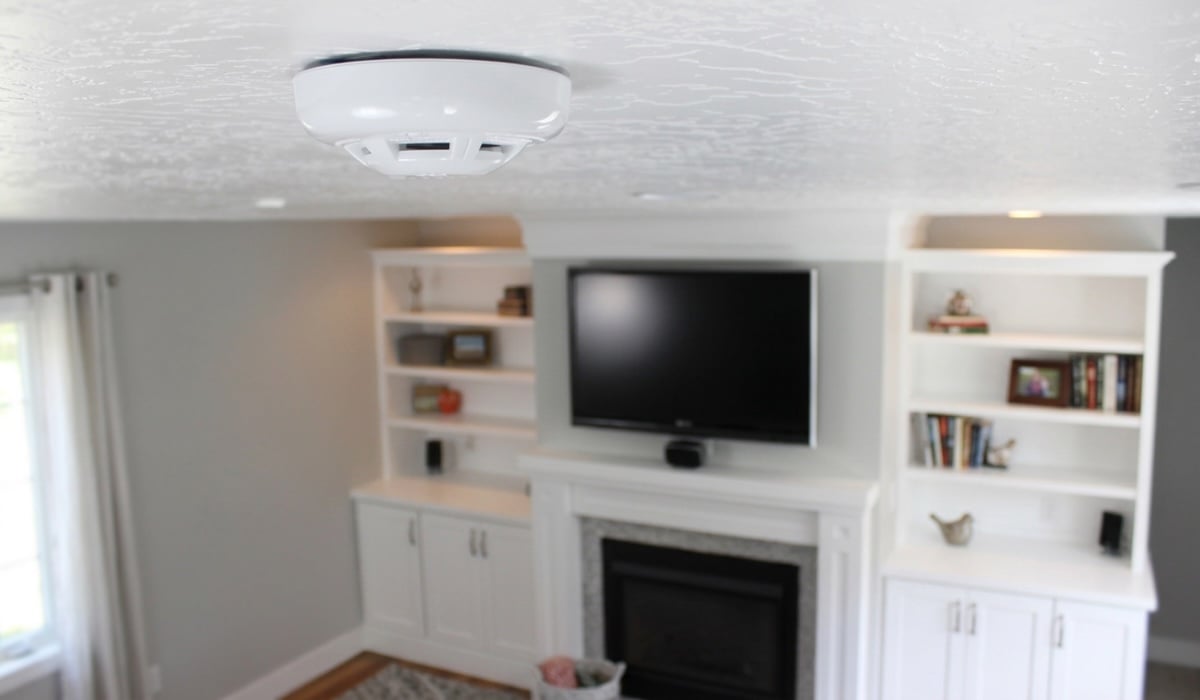
Place it on the ceiling or high on a wall if ceiling mounting isn't practical. Smoke rises, so detectors work best near the top of a room. Hallways just outside bedroom doors are an effective spot since one detector there can often cover two or three nearby rooms and that hallway.
Should Smoke Detectors Be Interconnected?
Interconnected smoke detectors are wired or wirelessly linked. When one detects smoke and sounds, all detectors in the home sound together. This happens instead of only the detector closest to the fire sounding.
Someone asleep in a second-floor bedroom with the door closed may never hear a detector go off in the basement if a fire starts or something else dangerous happens. An interconnected detector set solves that by making every detector in the house go off together.
How Often Should Smoke Detectors Be Tested and Replaced?
Both the U.S. Fire Administration and the Consumer Product Safety Commission are specific and consistent on testing the detector monthly by pushing the "Test" button. Battery replacement depends on the detector type — standard 9-volt and hardwired units need a fresh battery about once a year (or sooner if the detector starts chirping), while 10-year lithium detectors have a sealed, non-replaceable battery that lasts the life of the unit.
Regardless of how old or new the battery is, the detector still needs replacing every 10 years. A working battery doesn't mean the sensor inside the unit is still performing the way it did when it was new.
-
Test monthly using the detector's test button.
-
Replace standard batteries immediately if the detector chirps.
-
Replace the entire detector every 10 years, no matter how new the battery is.
Why Does Smoke Detector Placement Actually Matter?
According to the National Fire Protection Association, nearly three out of five home fire deaths occur in homes with no smoke alarm or one that failed to operate.
Separately, the U.S. Fire Administration notes that roughly “half of home fire deaths happen between 11 p.m. and 7 a.m., when most people are asleep." This is the scenario interconnected, properly placed detectors are built to catch: a fire starting while everyone in the house is unconscious and unlikely to notice anything unless a loud detector is nearby.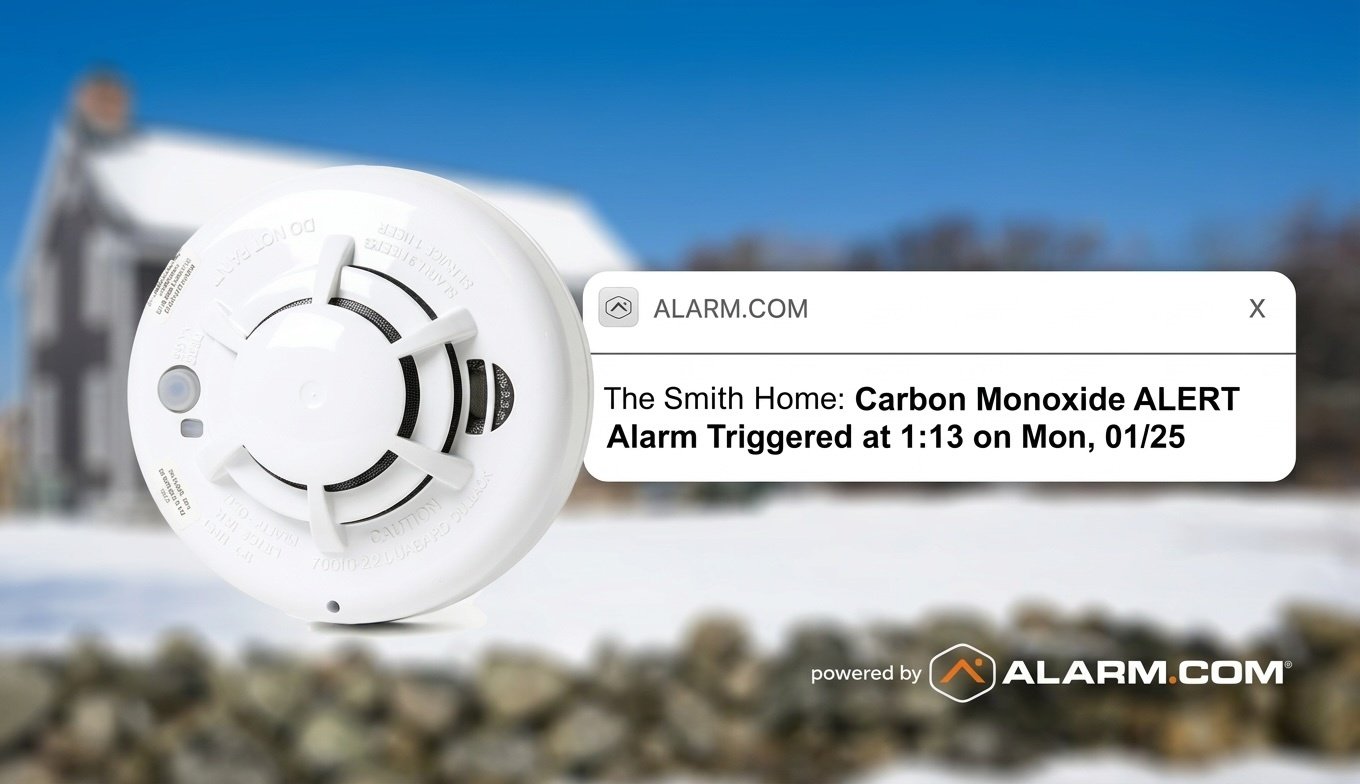
How Can a Monitored Smoke Detector Do More Than a Standalone Detector?
A standalone smoke detector only helps the people who can hear it. General Security offers smoke detectors and carbon monoxide monitors connected through the same platform as the rest of a home's security system, with alerts reaching both occupants and our Monitoring Center through the Alarm.com app. If a fire starts when no one's home or when everyone inside is asleep and doesn't wake to the sound, our 24/7 Monitoring Center will catch it.
For a closer look at how smoke detectors fit alongside the rest of a home security system's components, read our blog post, “How An Alarm System Works?”
For more on carbon monoxide detectors, check out “Carbon Monoxide Detector Beeping: Causes and What to Do.” To talk through smoke and CO coverage for a specific home, call us today.