
Jun 23, 2026, 9:00:04 AM General Security 4 min read
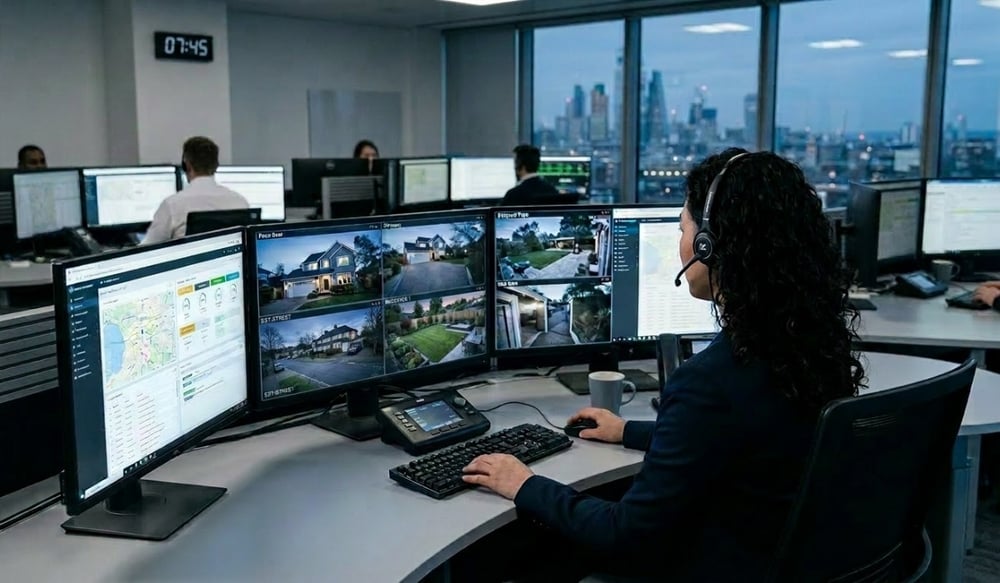
Professional alarm monitoring means a trained specialist at a staffed central station receives your alarm signal and dispatches first responders automatically. Self-monitoring means the system notifies you, and you are responsible for deciding what to do next.
Professional alarm monitoring and self-monitoring are not the same thing — and the difference isn’t subtle. It’s the difference between a trained specialist dispatching first responders within seconds and your phone buzzing while you’re in a meeting, asleep, or out of range.
The DIY security market has made self-monitoring more accessible than ever. Before you decide, it’s worth understanding exactly what each option does — and doesn’t — when something actually goes wrong.
What Is Self-Monitoring and What Are Its Limitations?
Self-monitoring means that when your alarm is triggered, the system notifies you, and you are responsible for assessing the situation and contacting emergency services yourself. There is no trained specialist involved, and no automatic dispatch.
On paper, self-monitoring sounds straightforward. Your sensor trips, you get an alert, you check the camera, you call 911 if needed. In practice, it requires you to be reachable, alert, and decisive in the exact moment an emergency unfolds. That’s a significant ask at 2 a.m., or when you’re traveling, or when the alert comes while you’re driving.
There’s also the false alarm problem.
Traditional alarm systems that rely solely on sensors — without visual context — produce false alarms more than 95% of the time.
When every alert requires your personal attention and judgment, alarm fatigue can set in quickly. Notifications get dismissed. Response slows. And in the rare event of a real emergency, the delay between the alarm triggering and law enforcement arriving is measured not in seconds, but in minutes while you work through a phone tree that starts with 911.
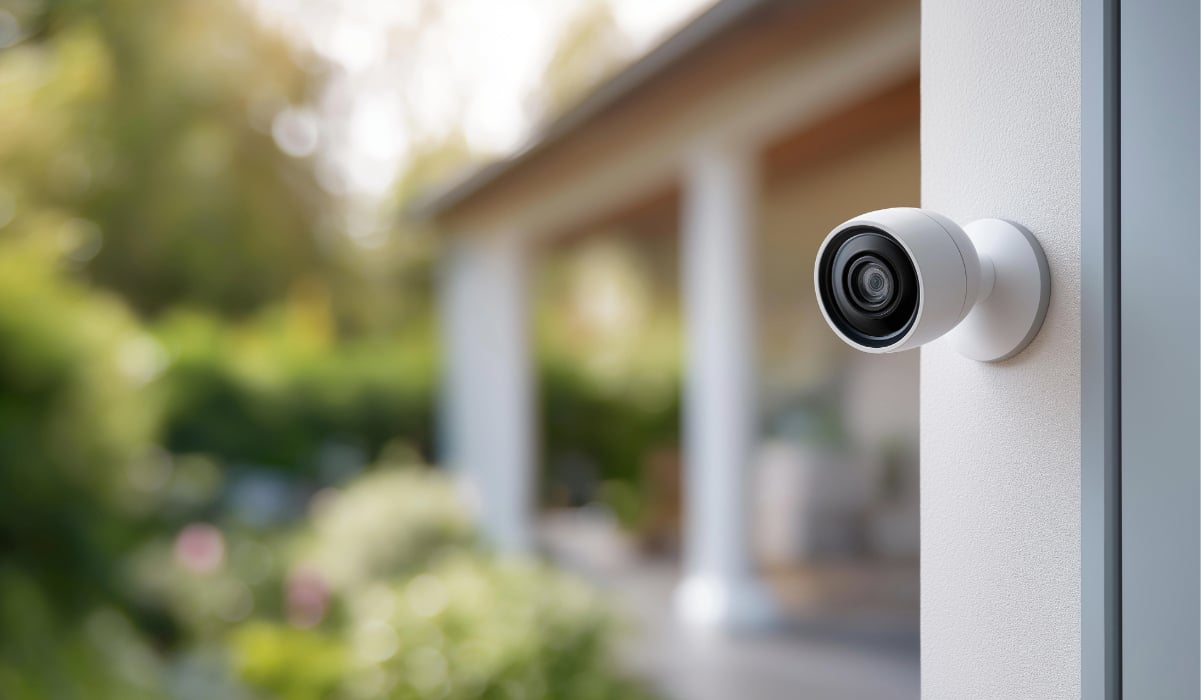
What Is Professional Alarm Monitoring and How Does It Work?
Professional alarm monitoring means a trained specialist at a central monitoring station receives your alarm signal, assesses the situation, and dispatches the appropriate emergency responders — automatically, around the clock, whether you’re available or not.
When a sensor trips on a professionally monitored system, the signal travels to a staffed central station in seconds. From there, a trained operator reviews the event — using visual verification through live camera feeds when available — and determines the appropriate response if it’s a real threat. If it’s a false alarm, the operator contacts you to confirm before sending anyone.
This process requires nothing from you in the moment. No phone call, no app check, no judgment call under pressure. The system handles it.
Visual verification is the process by which a central station operator reviews live camera footage during an alarm event to confirm whether a real threat is occurring before dispatching emergency responders, significantly reducing false-alarm dispatches.
General Security’s 24/7 alarm monitoring operates through its United Central Station, which holds TMA Five Diamond certification — the highest monitoring designation in the security industry. Earning that certification requires 100% of monitoring operators to be individually certified, passing rigorous training across emergency response coordination, communications with 911 centers, electronic communications systems, and national codes and standards, and to pass random third-party inspections.
What Is the Real Difference Between the Two When an Emergency Happens?
The core difference: With self-monitoring, you are the first responder. With professional alarm monitoring, a trained specialist at a central station is — and they act within seconds, whether you’re available or not.
Walk through the same scenario under each option:
Self-monitoring scenario. Your door sensor trips at 11:45 p.m. Your phone buzzes. You’re asleep. You wake up, check the app, try to pull up the camera feed. It buffers. You call 911 and describe what you think happened. Law enforcement puts you in the queue. Response time depends on local dispatch load.
Professional monitoring scenario. Your door sensor trips at 11:45 p.m. The signal reaches the central monitoring station in seconds. An operator reviews the live video feed and confirms unauthorized entry. Law enforcement is dispatched as a verified crime in progress — a categorization that moves the call to the top of the priority queue. You receive a notification simultaneously. You don’t need to do anything.
The gap in those two outcomes isn’t a matter of preference — it’s a matter of response time, and response time is the variable that determines how much of an emergency becomes a loss.
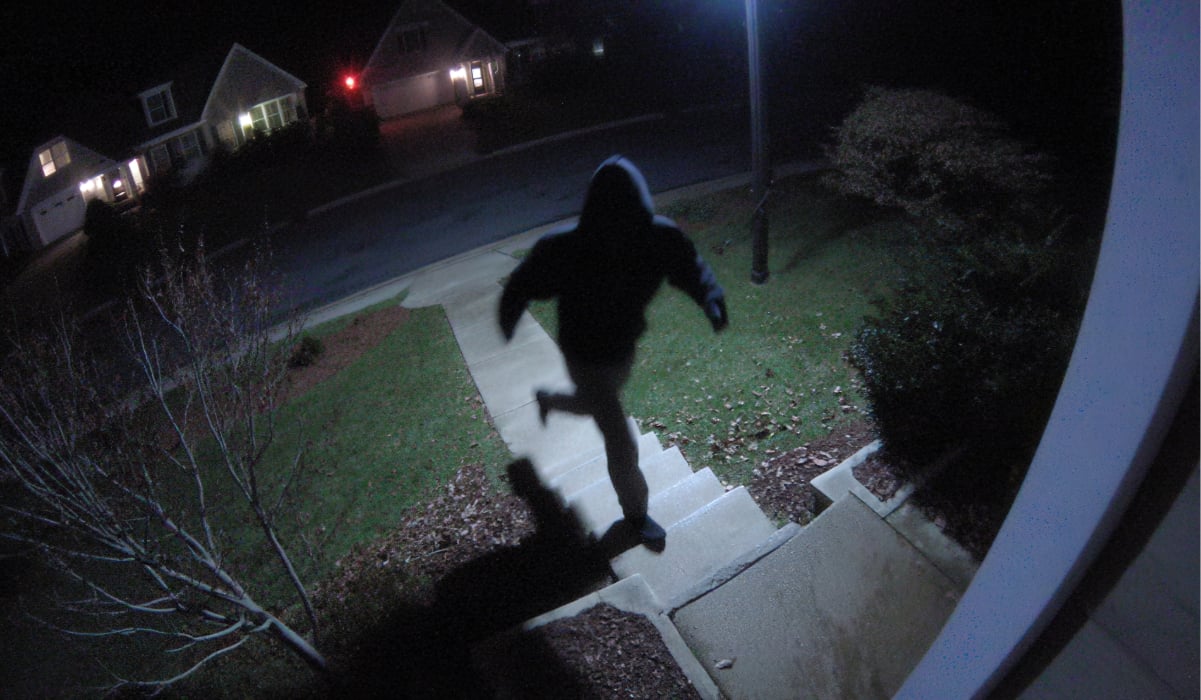
Does Professional Monitoring Cover More Than Burglaries?
Yes. Professional alarm monitoring covers burglary, fire, carbon monoxide, and medical emergencies — not just intrusions. Every monitored sensor connects to the same central station, and every alert type triggers the same immediate response protocol.
This is where self-monitoring falls short most visibly. A carbon monoxide detector going off at 3 a.m. requires the same thing a burglary does: someone has to be awake, present, and capable of responding correctly under stress. With 24/7 professional monitoring, the central station handles the dispatch regardless of the time or your availability.
Through the Alarm.com platform, General Security’s monitored systems also integrate smoke detectors, flood sensors, and wellness monitoring devices — all feeding into the same central station. One monitoring service covers the full range of threats, not just the ones that happen to trigger while you’re watching your phone.
Which Option Is Right for Your Home?
Self-monitoring works for people who are consistently reachable, comfortable responding to alerts in real time, and primarily concerned with awareness rather than automatic response. It may be a reasonable fit for renters, secondary properties, or situations where budget is the primary constraint.
Professional alarm monitoring is the right choice for anyone who wants their home protected when they can’t personally respond, which, for most homeowners, is most of the time. It’s also the only option that makes sense for fire, carbon monoxide, and medical emergencies, where the ability to self-respond may be compromised by the emergency itself.
The bottom line: a monitored home security system doesn’t ask anything of you in a crisis. That’s precisely its value.
General Security provides professional alarm monitoring through a TMA Five Diamond-certified central station for residential and commercial properties throughout the U.S. Every system is installed by certified technicians and monitored 24/7. Request a free quote or call us today.