
Can a Home Security System Lower Your Homeowners Insurance Premium?
Home Security Tips Home Security News Security Systems Smart Homes Jul 29, 2026, 12:29:08 PM General Security 4 min read
*This post is intended for general informational purposes only. Consult your insurance provider for information specific to your coverage.
Homeowners insurance providers may offer premium discounts to policyholders who install qualifying home security systems, but the requirements to qualify may vary significantly by insurer, state, and coverage type. The only way to know what applies to your policy is to ask your carrier directly.
Homeowner’s insurance premiums have risen steadily in recent years, with costs climbing significantly in coastal states. For homeowners already paying close attention to monthly expenses, a potential discount is worth understanding. A well-designed home security system can help reduce the likelihood of the exact events insurers pay out for most: burglary, fire, and water damage. That’s why carriers have built discounts into their rate structures for homes with certain protective equipment in place.
The Insurance Information Institute recommends checking with your insurance provider before installing a system specifically for a preferred rate. Costs, qualifications, and discount structures vary enough that the right call is always to verify with your specific carrier first.
Why Do Home Security Systems Affect Insurance Premiums?
Homeowners insurance is priced around risk. A home with a monitored alarm system, smoke and CO detectors, and water leak sensors presents a measurably lower risk of a costly claim than an unprotected home – and insurers can price that difference into the premium.
Insurance companies weigh the probability and cost of a claim when setting premiums. Anything that reduces the chance of a break-in, a fire spreading undetected, or a burst pipe causing damage before it’s noticed can directly lower the expected cost to the insurer.
What Security Features Do Insurers Typically Look For?
Professionally installed and monitored systems may mean a better chance to qualify for meaningful discounts than self-installed or unmonitored equipment.
While every carrier has its own criteria, insurers may consider the following features:
-
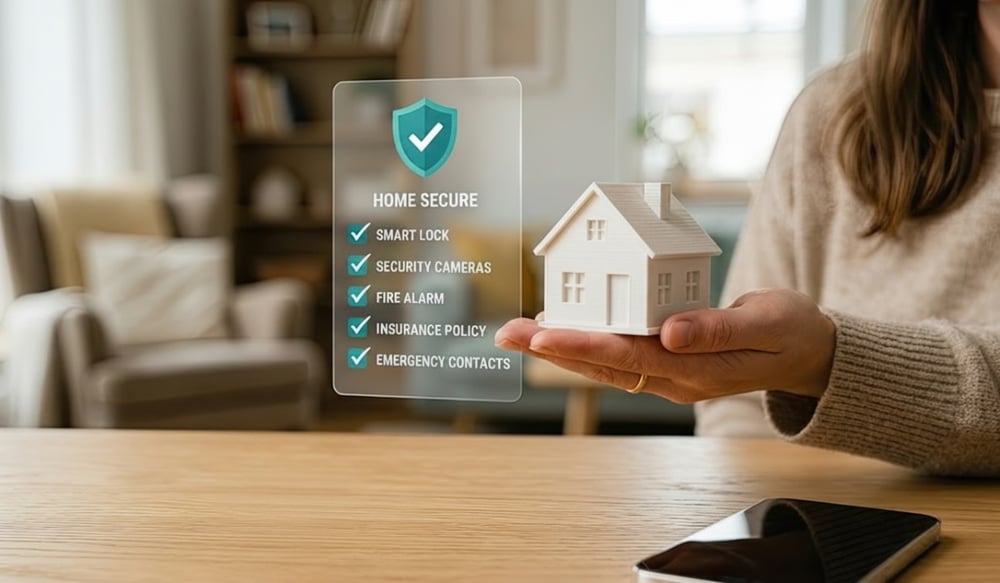
Monitored burglar alarm systems – alarms that signal a central monitoring station rather than simply alerting locally are viewed more favorably because they trigger an actual response, not just a sound
-
Smoke detectors and fire alarms – particularly monitored systems that notify a central station and dispatch emergency services automatically
-
Carbon monoxide detectors – often bundled with smoke and fire protection in insurer discount programs
-
Water leak and flood sensors – water damage is among the most common and costly homeowner claims, and leak detection is increasingly recognized by carriers
-
Smart locks and deadbolts – physical entry protection remains a baseline consideration for most carriers
-
Security cameras – interior and exterior cameras may factor into discounts depending on the carrier
The distinction between monitored and unmonitored systems matters more than most homeowners realize. A system that simply sounds a local siren when triggered is fundamentally different from one connected to a 24/7 central monitoring station that dispatches first responders quickly. Many insurers recognize that distinction.
What Discount Can a Homeowner Realistically Expect?
Security-related discounts on homeowners insurance premiums typically range from 2% to 20%, depending on the carrier, state, and devices installed. Source: Insurance Information Institute (III) – iii.org
The range is wide because no two carriers price the same way. A basic burglar alarm or smoke detector might qualify for a modest discount at one insurer and nothing at another. A professionally installed, centrally monitored system covering burglary, fire, CO, and water detection tends to land toward the higher end of that range, but again, only your carrier can confirm what applies to your specific policy.
For many homeowners, the safety value of the system is the primary reason to install it, and any insurance benefit is a secondary consideration.
Does Professional Monitoring Make a Difference for Insurance Purposes?
Yes. Many insurers specifically distinguish between self-monitored and professionally monitored systems. A professionally monitored alarm system – particularly one connected to a TMA-certified central station – may more likely qualify you for a meaningful discount because it provides verifiable, third-party-certified response capability.
General Security’s residential alarm systems are monitored through a TMA Five Diamond Monitoring Center – the highest monitoring certification in the security industry, requiring 100% operator certification and random inspections by Underwriters Laboratories (UL), FM Approvals, and Intertek/ETL. Some insurance carriers specifically ask whether a system is monitored by a UL-listed or nationally certified central station when determining discount eligibility.
If your carrier asks for documentation, General Security can provide a certificate of alarm installation confirming your system’s components, monitoring status, and central station certification – the standard document most insurers request to process a security discount.
How Do You Find Out If Your System Qualifies for a Discount?
Call your insurance carrier and ask. Discount availability, eligible devices, documentation requirements, and discount amounts all vary by carrier and state. No provider can tell you what your specific insurer will offer.
When you contact your insurer, have the following ready:
-
A description of your system – what it monitors, whether it’s professionally installed, and whether it’s centrally monitored
-
The name of your monitoring provider and their certification status (UL-listed, TMA Five Diamond, etc.)
-
A certificate of alarm installation, if your carrier requests one
It’s also worth asking whether adding specific components (water leak sensors, carbon monoxide detectors, or fire alarm monitoring) would unlock additional savings. Some carriers tier their discounts by the scope of the system, not just whether one exists.
Where Do You Start?
A home security system is first and foremost about protecting the people inside your home – not your premium. But for homeowners looking to understand every financial dimension of the decision, a conversation with your insurer and a conversation with a qualified security provider are both worth having. Request a free quote or call us today.